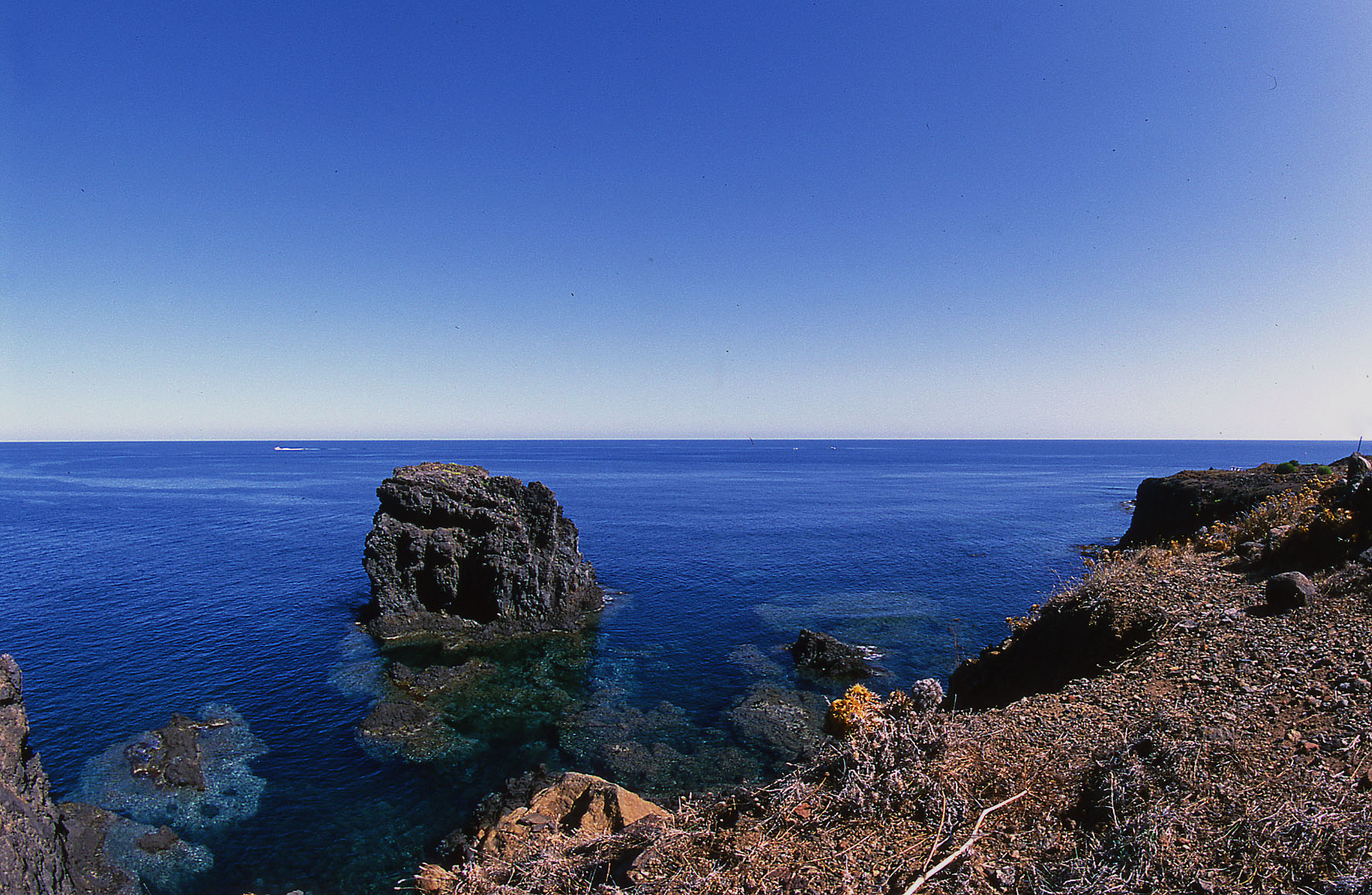
The ancient Romans called it Ustica (from ustum, “burnt”), while the Greeks knew it as Osteodes (“ossuary”), referring to the remains of mercenaries who died of hunger and thirst there. According to legend, it was also the home of the sorceress Circe, mentioned in the Odyssey, who turned unwary visitors into pigs.
Human settlements on the island date back to the Paleolithic era. Archaeological excavations have revealed the remains of an ancient Christian village. Graves, tunnels, and numerous artifacts, many found underwater due to the island’s numerous shipwrecks, testify to a continuous presence of Mediterranean civilizations such as Phoenicians, Greeks, Carthaginians, and Romans, who left traces throughout the island.
Later, Ustica became a base for Saracen pirates, which it remained for a long time. In the 6th century, a Benedictine community settled on the island but was soon forced to leave due to the wars between Christians and Muslims. In the Middle Ages, several attempts to colonize the island failed because of Barbary pirate raids, who turned Ustica into their stronghold.
In 1759, Ferdinand IV of Bourbon ordered the official colonization of the island. Two watchtowers, Torre Santa Maria and Torre Spalmatore, were built as part of Sicily’s coastal defense system, along with cisterns for rainwater collection and houses that became the main settlement at Cala Santa Maria. Colonists from Palermo, Trapani, and the Aeolian Islands settled there, accompanied by about a hundred soldiers.